
· by Hanna Carolina · 4 min read
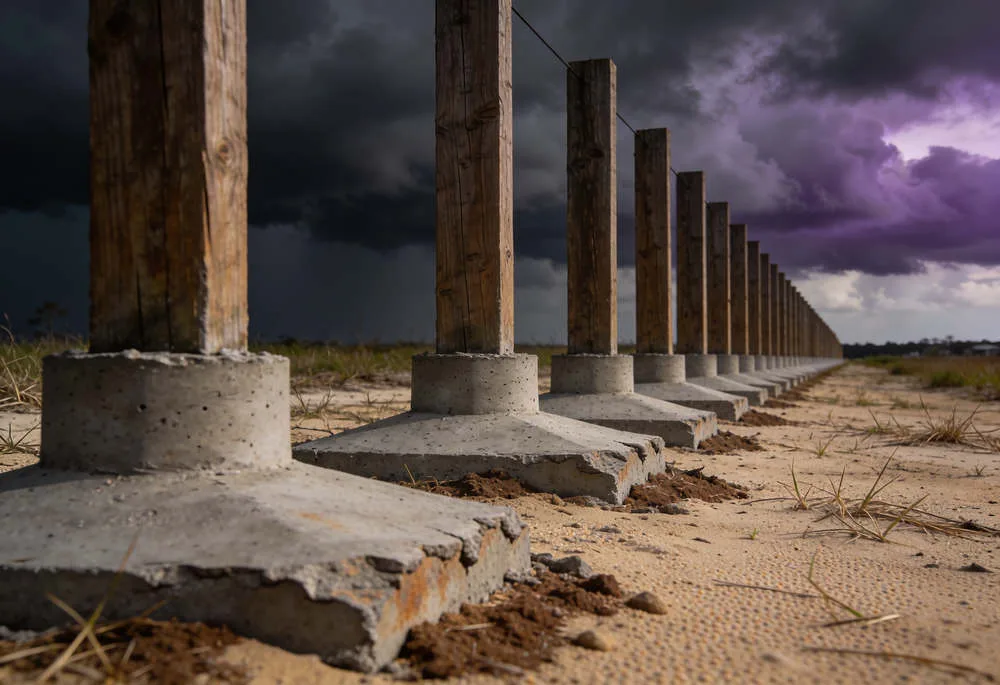
Most fences installed correctly in Orlando can handle tropical storm winds and the outer bands of a hurricane. PVC vinyl is rated for 90 mph winds. Pressure-treated wood holds up through gusts around 100 mph. Chain link handles strong storms better than either. The catch in every case is how the posts are set, because no material survives a Florida storm if the foundation underneath it does not.
If you are replacing a fence that went down in a previous storm or want a new installation built to hold, call Wulff Fence to talk through your options at (407) 745-8635 before storm season is underway.
Florida's sandy soil is the real problem
Homeowners in the Metrowest area and across the western Orlando suburbs tend to learn this lesson the hard way: sandy soil does not grip a fence post. A post driven or tamped into Florida's typical ground composition looks solid on day one and wobbles within a season. Add sustained wind and it leans, then falls. This is not a material failure. It is a foundation failure, and it happens with wood, vinyl, aluminum, and chain link equally.
Every post that Wulff Fence sets goes three feet into the ground and is anchored in concrete. That is not a premium upgrade or an optional add-on. It is the baseline for any install in Central Florida, because the soil does not give you another choice. Crews that skip the concrete are cutting a corner that will cost you a fence the next time a named storm tracks through the state.
The issue comes up repeatedly in neighborhoods around the College Park area, where older fence installations from a previous decade often used dry-tamped posts or minimal concrete footings sized for a different climate. Those fences tend to be the ones that end up in the yard after a serious storm. The replacement installs go in differently.
What each material actually handles
The wind rating conversation starts with the fence panel itself, which is what catches the wind load. A solid panel, like a wood privacy fence or a vinyl privacy fence, catches significantly more wind than an open-picket or mesh design. That is physics, not a flaw. A solid six-foot wood privacy fence in a 90 mph gust is under far more stress than a chain link fence at the same height in the same wind.
Vinyl fence installation rated for 90 mph covers the range of most tropical storms and weak hurricanes that affect the Orlando area. The panels are designed with some flex built in, which helps absorb gusts rather than fighting them rigidly. At sustained Category 2 winds and above, no residential fence material is guaranteed. That is not a sales disclaimer; it is honest engineering.
Wood comes in just above vinyl on wind resistance, handling gusts up to around 100 mph when posts are properly concreted. It has natural flex as well, though the bigger risk with wood in a storm is not the panels failing but debris striking them. A branch through a wood fence panel is a repair job. A post pulled out of sandy soil is a full section replacement.
Chain link fence installation is the most storm-resilient residential option because the mesh design offers almost no resistance to wind. Air moves through it rather than pushing against it. The posts and tension wires bear the load, and with concrete-set posts that load is manageable even in significant storms. For homeowners who prioritize storm survivability above aesthetics, chain link is the straightforward answer.
The honest version of what "hurricane-resistant" means
Here is the part most fence companies will not say directly: if a Category 2 or stronger hurricane makes a direct hit on your neighborhood in the Orlando area, the fence is not going to be your primary concern. Trees come down. Roofs are compromised. Power is out. The fence question comes after all of that.
What a well-built fence does is handle the more common events: tropical storms, the leading and trailing edges of hurricanes, and the isolated severe thunderstorms that Central Florida sees regularly through the summer. Building to the highest practical standard for those events, concrete-set posts, appropriate material for the application, proper gate hardware, is what separates an install that lasts from one that requires an insurance claim after every significant storm.
The investment difference between a properly engineered install and a cheaper one that skips the concrete is not large. The cost difference after a storm is significant. You can learn more about vinyl fence installation and chain link fence installation on the Wulff Fence site, or call (407) 745-8635 and schedule a consultation with Wulff Fence to get an install that is built for what Florida actually delivers.