
· by Hanna Carolina · 5 min read
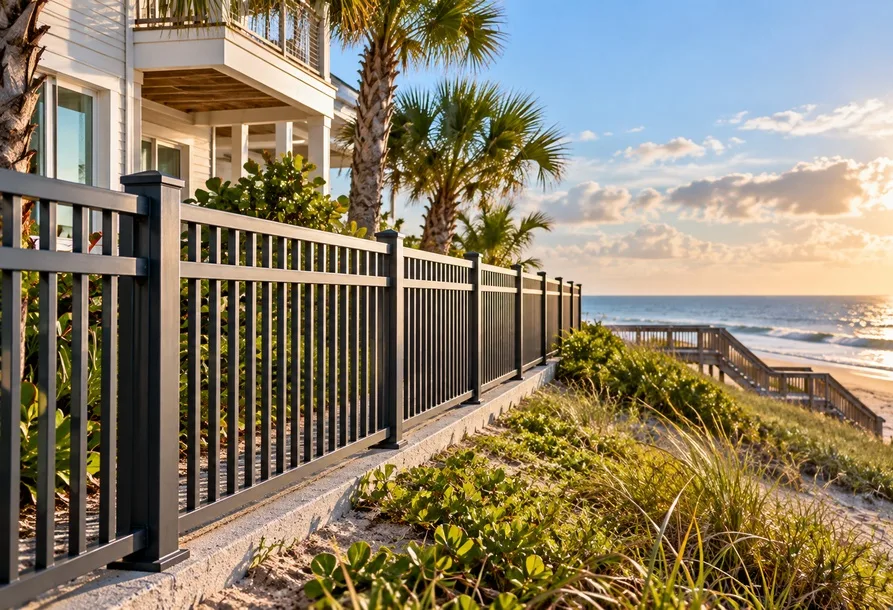
Near the ocean, the best fence materials are powder coated aluminum and vinyl, paired with stainless steel or heavily coated hardware. Salt air speeds up rust on ordinary steel and cheap fasteners, so a fence built for inland yards can start staining and failing within a few seasons on the coast. The right materials and installation details make all the difference.
As fence contractors who work in coastal communities, we know how hard salt exposure is on a fence. Wulff Fence helps Flagler Beach homeowners choose fencing that holds up to the conditions. To talk through your options, schedule a consultation with our team at (407) 745-8635.
Why does salt air destroy certain metals and fasteners?
Salt air carries moisture and chloride onto every surface it touches. Chloride breaks down protective coatings and speeds up corrosion on steel and iron, so plain steel, thinly galvanized wire, and low grade screws and hinges rust much faster near the ocean.
The breeze leaves a fine salty film on your fence every day. When humidity is high or morning dew settles, that film stays damp and keeps working on the metal. Once the galvanized coating wears through, rust spreads quickly, running down in orange streaks and weakening the fence from the inside.
Fasteners are often the first thing to go. A sturdy fence can fail early because its screws, bolts, or hinges were never meant for the coast. Homes within a few blocks of the Flagler Beach Pier get the full force of the ocean breeze, and we regularly see older fences there with sound panels but rusted hardware holding them together. Rusted hinges also make a gate sag, stick, and squeal every time it moves.
How do powder coated aluminum and vinyl hold up near the coast?
Aluminum and vinyl both hold up well near the coast because neither one rusts like steel. Aluminum forms its own protective layer, and a powder coated finish adds another barrier. Vinyl is a plastic, so salt and moisture cannot corrode it.
Powder coated aluminum is a great fit for pool enclosures, front yards, and ocean view lots where you want an open, elegant look. It gives the style of wrought iron without the rust, and the baked on finish resists chipping and fading better than paint. Our aluminum and metal fencing installation page shows the styles we offer.
Vinyl is the choice for privacy. Solid panels block wind, sand, and views from the street, which many homeowners along A1A appreciate when summer traffic picks up. Vinyl will not rust, rot, or need painting, and salt spray rinses off with a hose. You can see colors and styles on our vinyl fence installation page. When you talk with fence contractors, ask which of these two materials suits your lot best. Both let you upgrade without trading one maintenance headache for another.
Which hardware and post-setting details should fence contractors get right on the coast?
Stainless steel or coastal rated hardware matters most, because hinges, latches, and screws are where coastal fences usually fail first. Post setting matters too, since sandy soil and storm winds put extra stress on every post.
We match hardware to the fence material and the exposure. Using the wrong fasteners can cause rust stains and early failure even on an aluminum or vinyl fence. Self closing hinges and latches for pool areas need to be coastal rated as well, since they have to keep working reliably for safety.
Posts need a firm footing in our sandy soil. Setting them at the right depth in concrete helps the fence stand up to strong winds coming off the ocean or across the Intracoastal Waterway, and shaping the concrete to shed water keeps moisture from pooling at the base. It is also worth checking HOA rules and permit requirements before work begins, since they can matter in coastal neighborhoods.
One Flagler Beach resident told us he loved opening the windows and smelling the ocean breeze. He did not love the orange rust stains on his fence, or the gate hinges that squealed so loudly his neighbors knew whenever he came or went. We helped him replace it with corrosion resistant materials designed to withstand the conditions near the ocean.
What long-term maintenance does a coastal fence need?
A coastal fence needs very little maintenance when it is built from the right materials. Rinsing it with fresh water a few times a year, checking the hardware, and keeping plants trimmed back will keep it looking good for years.
Fresh water washes off the salt film before it builds up, which matters most after storms and long stretches without rain. A garden hose is usually enough for vinyl and powder coated aluminum. Skip harsh cleaners and pressure washers set too high, since they can damage finishes.
Check hinges and latches a couple of times a year and tighten anything loose. Trim back sea grapes, palms, and shrubs that rub against the fence or hold moisture against it. If you notice a chip in a powder coated finish, have it touched up before moisture gets underneath. Good fence contractors should walk you through these steps, and we do that with every coastal installation.
Ready for a fence that can handle the salt air? Call Wulff Fence at (407) 745-8635, or book your coastal fence consultation, and we will help you choose materials made to last in Flagler Beach.