
Living in Central Florida means your property faces unique challenges, from intense UV rays to hurricane-force winds. Choosing the right perimeter fencing isn't just about marking your boundary; it's about securing your home against the elements and potential intruders. In Osceola County and the greater Orlando area, the wrong material can rot, rust, or blow over within a few years, leaving your home vulnerable.
In Florida, your fence needs to withstand 90°F+ heat, high humidity, and wind gusts that can exceed 100 mph during storm season. Security is the priority, but you also have to consider maintenance and local regulations. For example, homeowners in HOA communities like Lake Nona or Celebration often face strict guidelines on fence height and style.
You also need to balance security with aesthetics. While a concrete wall offers maximum protection, it might not fit the look of a rural property in St. Cloud. In those cases, a professional rail fencing installation defines the boundary clearly without blocking the view, though it offers less privacy than other options. Before you break ground, check your local zoning laws and HOA covenants to avoid costly fines.
Vinyl fencing is surprisingly resilient during Florida hurricanes because it has "give" that allows it to flex in high winds rather than snapping. High-quality vinyl (PVC) doesn't rot, warp, or blister in the Orlando sun, making it a low-maintenance favorite for privacy and security.
Most fence contractors Osceola County Florida recommend vinyl for its longevity. Unlike wood, which needs staining every few years, vinyl just needs a quick wash with a garden hose. Expect to pay between $25 and $45 per linear foot for installed vinyl fencing. While the upfront cost is higher than wood, the lack of maintenance costs saves you money in the long run.
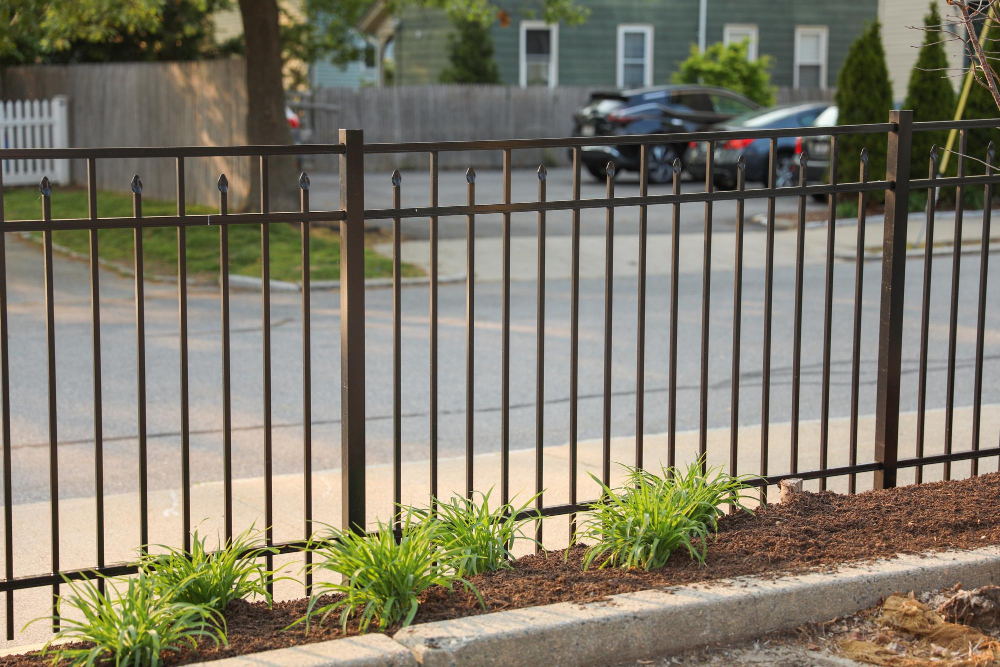
Aluminum is an excellent choice for security because it creates a strong, rigid barrier that is difficult to climb if you choose a style with spear tops. The biggest advantage aluminum has over steel in Florida is corrosion resistance. Our salty, humid air eats through untreated steel, but aluminum stands strong for decades without rusting.
We often recommend aluminum for pool enclosures and front yards where visibility is desired alongside security. It provides the classic look of wrought iron without the headache of sanding and painting away rust spots. Costs typically range from $30 to $50 per linear foot depending on the height and style.
Chain link is the undisputed king of affordability and durability, typically costing $15 to $30 per linear foot installed. It creates a secure boundary that keeps pets in and intruders out without breaking the bank. Because the wind passes right through the mesh, it puts very little stress on the posts during storms, making it incredibly stable.
However, installation quality matters immensely. A chain link fence installation done incorrectly will sag and lean over time, compromising your security. We use heavy-gauge steel and set posts deep in concrete to ensure the fence holds tension for years. For added privacy, you can add slats, but be aware that this increases the wind load on the fence.
Concrete fencing (or precast concrete walls) offers the highest level of security and privacy available. It creates a solid sound barrier, which is perfect if you live near busy roads like U.S. 192 or the Turnpike. It is virtually impenetrable and immune to rot, insects, and fire.
The trade-off is the cost and installation complexity. You can expect to pay $60 to $100+ per linear foot. It requires heavy equipment to install and isn't suitable for every soil type without significant foundation work. However, for maximum security, where budget allows, it's a fortress-like solution.
Wood fencing is the traditional choice for privacy, usually costing $15 to $30 per linear foot. Pressure-treated pine is the standard here because it resists termites and rot better than untreated lumber. Cedar is another great option that naturally repels insects, though it costs more.
The catch with wood in Florida is maintenance. The humidity causes wood to expand and contract, leading to warping or cracking if not sealed properly. You'll need to stain or seal it every 2-3 years to keep it secure. Many fence contractors Osceola County Florida, homeowners talk to will be honest about this upkeep—if you'ren't willing to maintain it, wood might become a security liability as it ages and weakens.
Florida's sandy soil presents a unique challenge for fence stability. Posts need to be set deeper here than in northern states, often with concrete footings to prevent leaning when the ground gets saturated during the rainy season.
Before digging, you must check for underground utilities and obtain the necessary permits. In Orange and Osceola counties, permit fees generally run between $85 and $150. Skipping this step can result in the county forcing you to tear down your new fence. Experienced fence contractors Osceola County Florida locals trust will handle the permitting process for you, ensuring your fence meets all wind codes and setback requirements.
Regardless of the material you choose, a little maintenance goes a long way.
Selecting the right material for your perimeter fence depends on your specific security needs, budget, and willingness to perform maintenance. Whether you need the impregnable privacy of vinyl or the utilitarian strength of chain link, professional installation is the key to a fence that lasts.
Don't leave your home's security to chance or subpar materials. If you're ready to secure your property, contact Wulff Fence at (407) 745-8635. We'll help you build a perimeter that stands the test of time.